∙
Cooper
∙
Reading time:
13 min

Dreamforce 2025 introduced a game-changing vision for knowledge management: AI-powered tools that integrate seamlessly into workflows and unify fragmented data systems. Salesforce's new concepts like the Agentic Enterprise, Agentforce 360, and Data 360 promise to streamline how teams access, share, and manage institutional knowledge. For knowledge managers, this means shifting from manual oversight to orchestrating AI systems that deliver accurate, context-aware answers across platforms like Slack, Salesforce, Notion, and Confluence.
Key takeaways include:
AI Agents for Complex Tasks: Tools like Agentforce 360 automate multi-step processes with human oversight, reducing repetitive work.
Unified Knowledge Access: Data 360 indexes structured and unstructured data, enabling employees to retrieve reliable information quickly.
Slack as a Central Hub: Slack's evolution into the "Agentic OS" integrates AI-driven workflows, transforming conversations into actionable knowledge.
Governance and Compliance: Features like audit logs, version control, and secure data collaboration ensure transparency and accountability.
For knowledge managers, the focus now shifts to integrating verified data sources, blending AI automation with human oversight, and setting measurable success metrics. Tools like Question Base stand out by delivering trusted, auditable answers at a lower cost ($8/user/month) compared to Slack AI ($18/user/month), making them ideal for enterprise teams in regulated industries.
The future of knowledge management is here - it's time to leverage these advancements to simplify workflows, improve accuracy, and empower teams to work smarter.
Dreamforce Main Keynote 2025
Top AI-Powered Knowledge Management Innovations from Dreamforce 2025
Dreamforce 2025 unveiled three groundbreaking advancements in enterprise knowledge management, tackling persistent challenges like fragmented information, inconsistent accuracy, and the growing demand for real-time automation.
Agentforce 360: Autonomous AI Agents
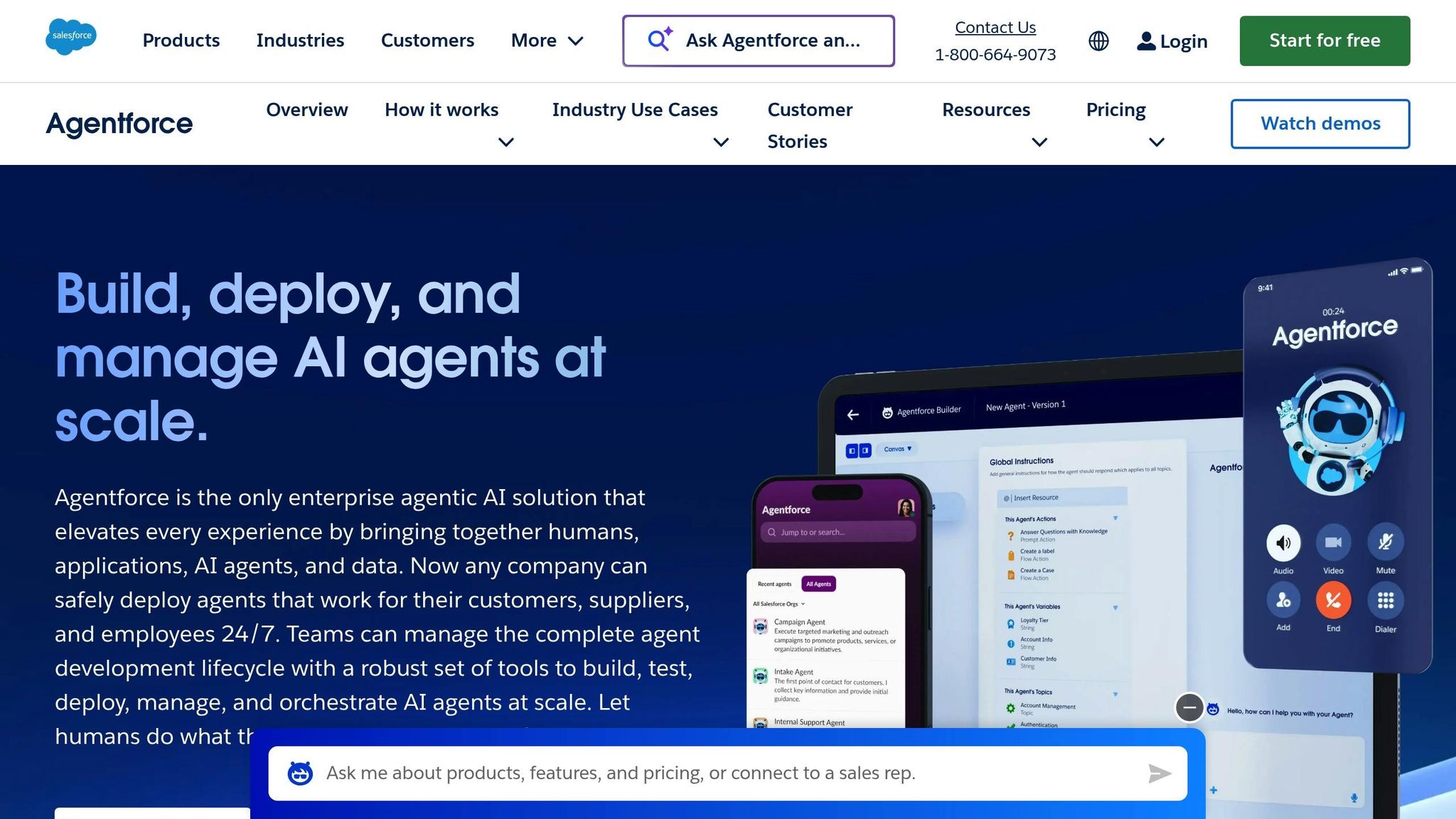
Agentforce 360 redefines AI by moving beyond traditional assistants to fully autonomous AI partners. Unlike basic chatbots that only respond to queries, these agents can handle complex, multi-step tasks while still allowing for human oversight on critical decisions[1][5]. A conversational interface enables knowledge managers to adjust system settings using natural language, eliminating the need for coding expertise[2]. Through collaborations with OpenAI and Anthropic, Agentforce 360 integrates advanced models like GPT-5 and Claude, bringing sophisticated reasoning capabilities to industries with strict regulations[5]. These agents are tailored to provide specialized support for departments such as HR and IT, making them versatile tools for enterprise teams.
The next innovation, Data Cloud Context Indexing, takes knowledge unification to another level.
Data Cloud Context Indexing for Unified Knowledge Access
Data 360 (formerly Data Cloud) addresses the problem of scattered information by creating a unified data layer through contextual indexing. This feature enables AI agents to seamlessly operate across various knowledge sources by providing the necessary context[1][3][4]. The system processes both structured data, like spreadsheets and databases, and unstructured content, such as PDFs and diagrams[1][4]. Another key feature, Data 360 Clean Rooms, ensures secure cross-department collaboration while maintaining strict access controls[4]. By breaking down data silos, employees can access information through a single intelligent interface that understands the relationships and context between different sources.
Slack-Native AI Solutions for Internal Support
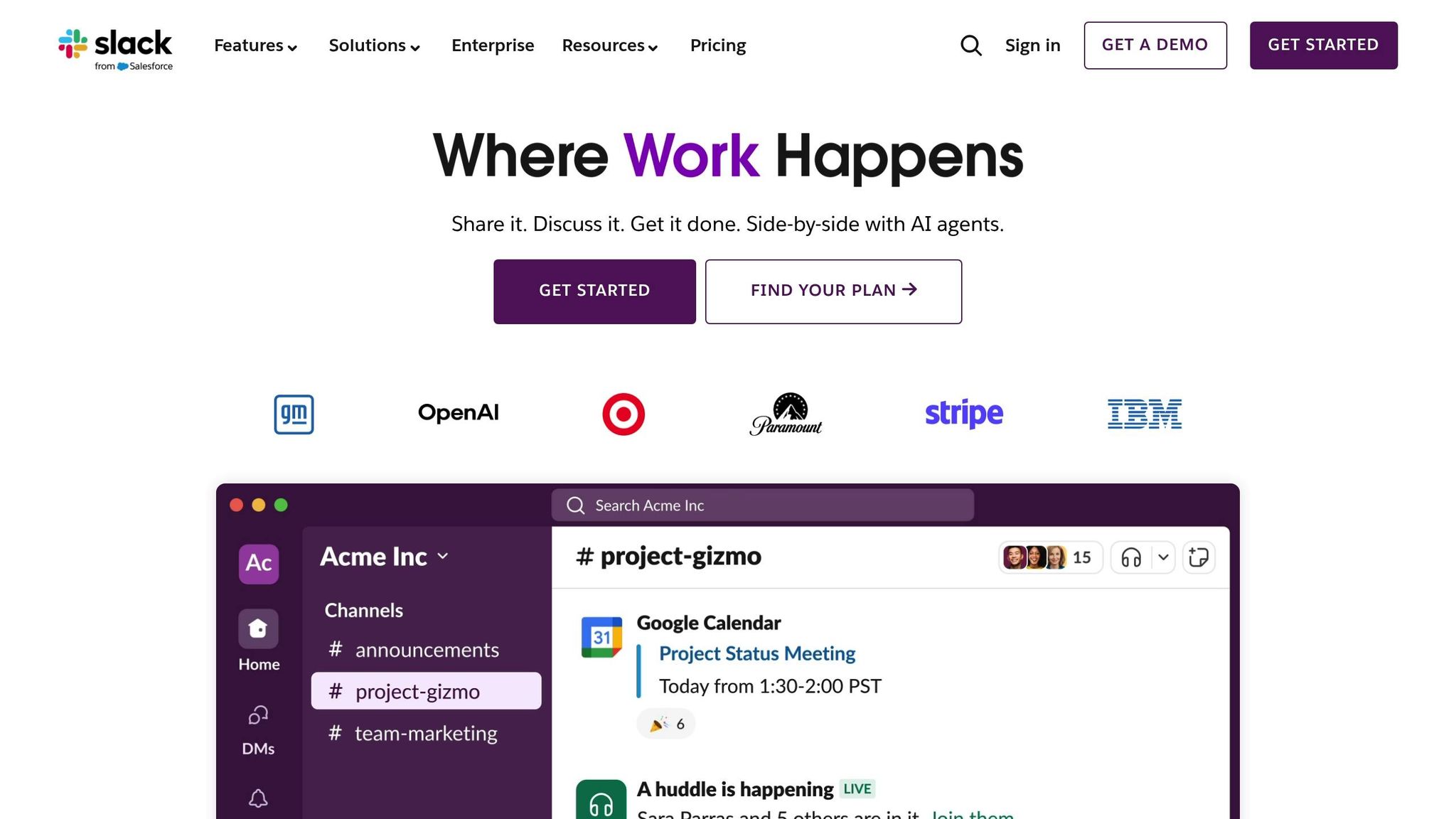
Building on these advancements, Slack has evolved into a central hub for internal support and enterprise knowledge sharing. Now functioning as an Agentic OS, Slack integrates powerful AI features that go far beyond simple chat tools[1]. Slack AI enhances productivity with features like conversation summaries, but its real strength lies in purpose-built solutions like Question Base. These tools connect directly to trusted documentation platforms - such as Notion, Confluence, and Salesforce - ensuring employees receive accurate, verified information from authoritative sources. Enhanced security and analytics features manage access while tracking automation performance and resolution metrics. Additional capabilities, such as thread summarization and automated FAQ creation, transform Slack conversations into searchable, reusable knowledge assets. This approach underscores the importance of purpose-driven tools for delivering accurate, enterprise-grade knowledge management.
Practical AI Strategies for Knowledge Managers
The ideas presented at Dreamforce 2025 offer actionable strategies for knowledge managers, focusing on creating reliable knowledge systems that grow with the organization while adhering to essential enterprise governance standards.
How to Capture and Structure Institutional Knowledge
Dreamforce 2025 highlighted several ways to strengthen your organization’s knowledge framework. Here’s how to put them into action:
Start with conversation mining. Use AI to capture and document valuable insights from Slack conversations, transforming fleeting moments into searchable, lasting assets.
Centralize knowledge with unified indexing. Integrate platforms like Slack, Salesforce, and Confluence to create a single, accessible knowledge base. Tools like Question Base make this seamless by connecting directly to verified sources like Notion, Confluence, and Salesforce.
Combine AI automation with human verification. For example, Question Base identifies recurring answers in Slack threads and suggests adding them to company documentation. Human oversight ensures these additions are accurate and relevant.
Use per-channel settings and case tracking. Features like duplicate content checks and automated FAQ creation help maintain an organized and structured knowledge base, preventing the chaos that often comes with rapid data growth.
Automating Knowledge Retrieval and FAQ Creation
Deploy instant answer systems. These tools provide quick, reliable, and citation-backed responses directly within Slack.
Analyze conversations to refine FAQs. AI can help evolve your FAQs by identifying common questions and building a dynamic, user-validated knowledge base.
Track unresolved queries systematically. Advanced AI tools log unanswered questions, helping managers identify gaps in documentation or areas where new knowledge needs to be captured.
Summarize threads for actionable insights. Long discussions can be distilled into key takeaways using AI, making it easier to preserve and act on valuable information buried in extensive chat histories.
Maintaining Governance, Accuracy, and Compliance
Set up strong governance practices. Use tools like version control, audit logs, and real-time permission diagnostics integrated with your DevSecOps pipeline. Analysts predict that by 2029, AI will enhance nearly 40% of work across Fortune 1000 companies, making governance essential for stability and scalability[1].
Train teams on AI tools with human oversight. Moving from siloed knowledge bases to unified, context-rich platforms requires employees to understand both the strengths and limitations of these systems[1].
Ensure enterprise-grade security. Implement SOC 2 Type II-compliant solutions, including encryption for data at rest and in transit. Platforms like Question Base offer these features along with on-premise deployment and white-labeling options, ensuring your systems meet strict enterprise standards while remaining easy to use.
The key to success lies in balancing automation with human insight, ensuring AI enhances the expertise and critical thinking that knowledge managers bring to the table.
Question Base vs. Slack AI for Enterprise Knowledge Management

In light of Dreamforce 2025's spotlight on intelligent automation, it's crucial for knowledge managers to grasp the distinctions between specialized tools like Question Base and more general-purpose solutions such as Slack AI.
Feature Comparison: Accuracy, Data Sources, and Integration
When it comes to enterprise knowledge management, accuracy, data integration, and governance are critical. While Slack AI shines in general productivity and conversation summaries, Question Base is designed to meet the unique demands of enterprise teams.
Feature | Question Base | Slack AI |
|---|---|---|
Accuracy | AI-generated content, verified by human experts | AI-generated only |
Data Sources | Pulls from FAQs, Slack channels, help centers, Salesforce, Confluence, OneDrive, and other enterprise systems | Searches Slack history and integrated tools (available on Business Plan & Enterprise tiers) |
Knowledge Management | Offers per-channel settings, AI behavior customization, case tracking, duplicate checks, and new knowledge capture | No explicit features listed |
Analytics | Tracks questions asked, resolution rates, automation rates, and identifies unhelpful answers | Basic usage statistics |
AI Summaries | Converts common thread answers into formal company documentation | Generates thread and meeting summaries |
Pricing | $8 per user per month | $18 per user per month |
One standout feature of Question Base is its human verification layer, where subject matter experts review AI-generated responses before they are added to the knowledge base. This process ensures accuracy and builds trust in its system. Additionally, Question Base integrates directly with enterprise platforms, pulling answers from verified sources like Salesforce and Confluence, rather than relying solely on Slack chat history. Slack AI, while offering data integration, limits these capabilities to higher-tier plans.
These differences highlight the importance of choosing the right tool based on your team’s specific needs.
Use Cases: When to Choose Question Base or Slack AI
The features outlined above make it clear when each tool is the better fit for your organization. While Slack AI focuses on boosting individual productivity with features like conversation summaries, Question Base is tailored for enterprise teams that require verified and auditable knowledge management.
Here’s how Question Base serves specific teams:
HR and IT Teams: Managing policy-related questions or support processes demands accurate, auditable knowledge. Question Base’s integration with ticketing systems and detailed analytics - such as resolution rates - makes it an ideal choice.
Operations Teams: In industries with strict regulations, the audit trails and source attribution provided by Question Base are critical for meeting compliance and governance requirements.
Dreamforce 2025 emphasized the need for enterprise-grade AI, and Question Base aligns perfectly with those priorities. Its verified approach ensures compliance and operational rigor, making it a better choice for teams that need structured knowledge management.
At $8 per user per month, Question Base is also more cost-effective than Slack AI, which charges $18 per user per month. This price difference can significantly influence adoption decisions, particularly for organizations looking to scale AI across multiple departments.
With analysts predicting that AI will transform nearly 40% of all work across Fortune 1000 companies by 2029[1], investing in a robust knowledge management solution is more important than ever. The choice ultimately depends on whether your organization values individual productivity or requires a specialized tool that delivers verified knowledge and enterprise-level governance.
Key Takeaways for Knowledge Managers
Dreamforce 2025 highlighted a key reality: AI-powered knowledge management is no longer optional - it's essential. Analysts predict that by 2029, AI will influence nearly 40% of all work across Fortune 1000 companies, leaving little time for businesses to adapt strategically[1]. For knowledge managers, acting now is critical to gaining a competitive edge. Delays could result in reduced efficiency and declining employee satisfaction. These insights underline the urgency for US-based enterprises to act decisively.
Next Steps for US-Based Enterprises
To stay ahead, organizations should focus on three essential actions:
Integrate verified data sources like Notion, Confluence, Salesforce, or OneDrive.AI-powered solutions must rely on trusted enterprise systems, not just Slack conversations or email threads. This step ensures accuracy and compliance with governance standards critical to US businesses.
Incorporate human verification workflows. The most effective deployments blend AI's speed with human expertise. For instance, tools like Question Base allow subject matter experts to review and approve AI-generated responses before they become part of the official knowledge base. This is especially important for industries with strict regulatory requirements.
Define measurable success metrics from the outset. Track key indicators like resolution rates, automation percentages, and knowledge gaps. These metrics not only justify the investment but also guide continuous improvement. At $8 per user per month, Question Base provides detailed analytics to simplify ROI evaluation.
Starting with high-demand support areas such as HR, IT, or operations can yield immediate results. These departments often benefit quickly from automated knowledge retrieval and can act as champions for broader adoption across the organization.
Dreamforce 2025 has made it clear: knowledge management is undergoing a profound shift, and these steps are just the beginning.
How Dreamforce 2025 Will Transform Knowledge Management
Dreamforce 2025 introduced groundbreaking tools like Data 360 and Agentforce 360, designed to eliminate silos and turn fragmented systems into unified resources. This approach accelerates issue resolution and enables smarter decision-making across the enterprise[1][3]. This isn't just about small improvements - it's a major leap toward creating seamless, interpretable data connections across platforms.
Industry leaders at Dreamforce highlighted the rise of the agentic enterprise, where every employee is paired with a role-specific AI partner to handle routine tasks and improve decision-making[1].
This vision goes far beyond simple Q&A systems. The next generation of AI-powered knowledge management tools can deliver context-aware responses, understanding not just the questions employees ask, but the reasons behind them. For knowledge managers, this means shifting from reactive content creation to proactive knowledge orchestration.
The introduction of semantic layer capabilities through Data 360 ensures consistent metrics and unified business terminology across platforms. This transparency in AI-driven decisions helps address the challenge of maintaining consistency across various teams and data sources[1].
Looking forward, knowledge managers will need to focus on embedding governance and version control into AI workflows. Ensuring that automated changes are traceable, testable, and secure will be critical for maintaining control and trust[2]. Organizations that balance automation with rigorous oversight will set the benchmark for knowledge management in the AI-driven future.
This transformation is already in motion. Knowledge managers who embrace these advancements - armed with the right tools, strategies, and metrics - will position their organizations as leaders in the emerging era of the agentic enterprise.
FAQs
How can AI-powered tools like Agentforce 360 and Data 360 improve knowledge management for enterprises?
AI-powered platforms such as Agentforce 360 and Data 360 are reshaping how enterprises handle knowledge management. By automating workflows and improving access to information, these tools deliver accurate insights right when they’re needed - reducing manual effort and boosting overall efficiency.
These systems often rely on AI-driven automation to capture and structure institutional knowledge. This helps cut down redundant tasks and ensures that valuable information is organized and accessible. They also integrate seamlessly with tools like Notion, Confluence, and Salesforce, creating a centralized hub where teams can easily locate and share verified information. By simplifying internal support processes and enabling smarter decision-making, these tools empower businesses to stay flexible and aligned in managing their knowledge resources.
How does Question Base compare to Slack AI in data integration and knowledge management?
While Slack AI is great for summarizing conversations and improving overall productivity, Question Base takes a different approach, focusing specifically on enterprise knowledge management. It integrates seamlessly with trusted platforms like Notion, Confluence, and Salesforce, delivering expert-verified answers instead of relying heavily on chat history.
What sets Question Base apart are its advanced tools tailored for enterprise needs, including case tracking, per-channel settings, duplicate detection, and the ability to identify and learn from knowledge gaps. These features are designed to streamline team workflows and improve operational efficiency. In contrast, Slack AI centers on general-purpose tasks and doesn’t offer these specialized capabilities.
How can knowledge managers balance AI automation with human oversight to ensure accuracy and compliance?
Balancing the efficiency of AI automation with the reliability of human oversight requires careful planning to ensure both accuracy and compliance. One way knowledge managers can navigate this is by leveraging AI tools specifically designed for enterprise environments, such as Question Base. This platform integrates directly with trusted knowledge repositories like Notion, Confluence, and Salesforce, ensuring that responses are drawn from verified, consistent sources rather than relying solely on chat history.
For compliance, it's crucial to establish workflows where AI-generated suggestions are reviewed by subject matter experts, particularly when dealing with regulated or high-stakes information. Additionally, using analytics tools to monitor resolution rates and pinpoint knowledge gaps can help fine-tune both AI and human input. This continuous feedback loop ensures the system improves responsibly while adapting to the team’s evolving needs.