∙
Cooper
∙
Reading time:
13 min

Searching for answers across multiple platforms wastes time. Multi-cloud setups, where teams use tools like AWS, Google Drive, and Slack, often create delays due to scattered data and inconsistent search functions. These inefficiencies slow down workflows and impact productivity.
AI offers a solution. By unifying access to information and optimizing cloud performance in real time, AI tools reduce delays and improve efficiency. For example:
Unified Knowledge Access: Tools like Question Base integrate with Slack, delivering instant answers from trusted sources without switching platforms.
Real-Time Latency Detection: AI monitors and resolves network issues like congestion or scheduling conflicts.
Smarter Load Balancing: AI routes requests to the fastest cloud provider, ensuring smoother operations.
Predictive Analytics: AI anticipates bottlenecks and adjusts resources proactively.
These tools not only solve technical delays but also streamline team workflows, making them essential for modern multi-cloud environments.
Multi-Cloud Architecture: 4 Latency & Resilience SECRETS Senior Engineers MUST Know
How AI Optimizes Multi-Cloud Operations
AI is transforming how multi-cloud operations handle latency challenges by introducing smarter, more efficient processes. Instead of relying on manual adjustments and disconnected systems, AI creates a seamless optimization layer that continuously monitors, predicts, and fine-tunes data transfer performance across different cloud environments.
AI for Real-Time Latency Detection
AI-powered systems excel at identifying and addressing latency issues in real time. They monitor multiple sources of delay - such as data congestion, inefficient network usage, serialization delays, and scheduling conflicts - that often arise when requests span geographically distributed cloud providers[1][4].
Because resources spread across various locations experience fluctuating network performance, AI tracks these layers simultaneously to ensure system responsiveness remains high[3]. For example, when a request involves multiple cloud providers, delays can build up due to network congestion, routing inefficiencies, or protocol overhead[4]. To combat this, AI employs high-speed polling techniques that minimize response time variability, even during peak workloads[1].
AI-Driven Load Balancing Across Clouds
AI takes load balancing to the next level by analyzing network metrics and data access trends to route requests to the provider or zone with the lowest latency[5]. During periods of heavy usage, AI can dynamically shift requests to cloud providers with more available capacity, ensuring that data-heavy operations stay close to storage resources to reduce delays[5].
By implementing asynchronous processing, AI separates data retrieval from delivery, adjusting dynamically based on system load and latency requirements across different cloud environments[4]. This approach ensures workloads are distributed efficiently, maintaining consistent performance even as demand fluctuates. Predictive analytics further enhances this process by enabling proactive latency management.
Predictive Analytics for Preventing Latency
Predictive analytics leverages historical data, real-time metrics, and traffic patterns to anticipate bottlenecks before they occur. This allows for proactive redistribution of workloads and resource adjustments. For instance, AI uses time-series forecasting to predict network congestion based on usage patterns, enabling preemptive workload shifts across cloud providers. Machine learning models also forecast scheduling conflicts and resource shortages, allowing systems to adapt before performance issues arise[4].
If a predictive model identifies potential congestion on a specific cloud provider's network, AI can pre-stage data in alternative locations or adjust processing schedules to avoid peak latency periods[4]. This proactive approach shifts latency management from reactive troubleshooting to forward-thinking optimization, ensuring consistent performance even as workloads grow and scale[1].
Thanks to these AI-driven strategies, organizations can achieve sub-millisecond average latency with near-linear scalability and high resource utilization across distributed systems[2]. These performance improvements are made possible by AI's ability to analyze conditions in real time and adjust routing, transfer protocols, and processing strategies to maximize speed and minimize delays[1]. This mirrors how tools like Question Base streamline internal operations by making knowledge access faster and more efficient.
How Companies Use AI to Solve Multi-Cloud Latency
Businesses across various sectors are turning to AI-powered tools to tackle the latency issues that arise when working across multiple cloud providers. These tools are transforming multi-cloud environments from complicated, delay-prone systems into more responsive and efficient infrastructures. Let’s look at how companies are applying these AI-driven solutions.
Improving Data Transfers Between Clouds
AI is revolutionizing how data moves between clouds by addressing traditional bottlenecks and boosting transfer speeds. Using advanced techniques, these solutions ensure data flows more efficiently across networks, often surpassing the speed of transfers within a single server[1].
A standout example is Oracle Cloud Infrastructure’s use of Alluxio, which achieved sub-millisecond average latency while maintaining near-linear scalability. This setup ensured high GPU utilization across multiple accelerators in a multi-cloud AI environment[2]. The key to this performance lies in distributed metadata management, which eliminates congestion by enabling parallel file access. This approach replaces the older, centralized metadata servers that often slow down data transfers[1].
AI also employs kernel bypass methods to sidestep delays associated with traditional data movement processes[1][4]. Additionally, solutions like Content Delivery Networks (CDNs) and edge computing bring data closer to users, processing it near the source. This minimizes the need for long-distance data transmission, which is a common cause of delays in multi-cloud setups[3].
Maintaining Performance During Peak Usage
Handling surges in demand is another area where AI shines. High-traffic periods can strain multi-cloud architectures, but AI-driven solutions help companies maintain consistent performance even during these spikes. For example, Certegy Payment Solutions faced challenges when migrating to a multi-cloud environment for real-time payment processing. By using Lumen Cloud Connect for smooth migration, Lumen IP VPN for secure, high-performance connectivity, and Lumen Adaptive Network Security for low-latency protection, Certegy managed to reduce transaction times without any service interruptions[6].
The partnership between Lumen and IBM further highlights how AI can address peak usage challenges. By integrating IBM’s watsonx AI tools with Lumen Edge Cloud infrastructure, they achieved sub-5 millisecond latency and direct connectivity to major cloud providers[6]. These solutions enable businesses in industries like finance, healthcare, manufacturing, and retail to analyze massive amounts of data almost instantly. The result? Reduced latency, improved responsiveness, and better operational insights[6].
AI also supports dynamic bandwidth allocation through adaptive networking, allowing companies to optimize performance and save costs during demand fluctuations[6]. Techniques like high-speed polling, where systems continuously check for I/O completions, further reduce latency and ensure consistent performance, even as workloads grow[1].
Question Base for Faster Internal Knowledge Access
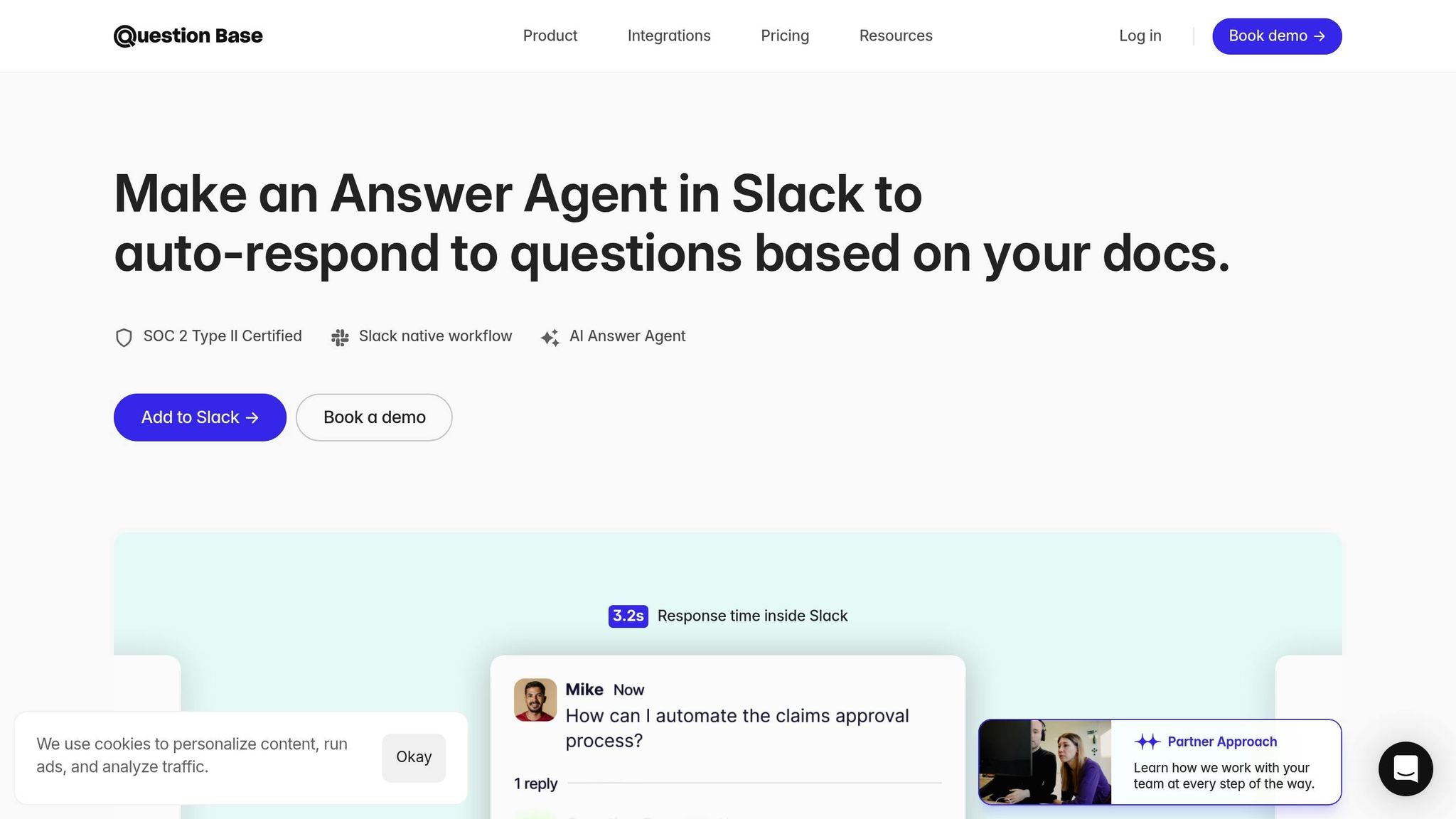
AI doesn’t just optimize networks - it also speeds up internal workflows. Latency isn’t limited to infrastructure; it can also slow down team responsiveness. For multi-cloud operations teams juggling complex systems, Question Base offers a solution by integrating directly into Slack as an AI-powered answer agent. It connects with tools like Notion, Confluence, Google Drive, Zendesk, and Intercom to streamline knowledge retrieval.
Instead of wasting time searching through multiple platforms for configuration details, deployment steps, or incident response protocols, engineers get instant answers within Slack. Question Base also maintains a dynamic FAQ that evolves with workflows, identifies content gaps, and organizes Slack conversations into structured, searchable documentation. This significantly reduces mean time to resolution (MTTR) during latency-related incidents by cutting down the time spent navigating disparate systems.
To ensure security, Question Base supports SOC 2 Type II compliance with encryption both at rest and in transit. It also offers optional on-premise deployment, so teams can manage knowledge efficiently without compromising data protection while optimizing multi-cloud performance.
How to Evaluate AI Solutions for Multi-Cloud Latency
Selecting the right AI solution to address multi-cloud latency requires careful consideration of three core factors: accuracy, integration, and security. These criteria help ensure that your chosen tool not only identifies latency issues effectively but also integrates smoothly with your systems while keeping your data secure.
Accuracy and Data Source Reliability
Start by assessing how precise the tool is in detecting and measuring latency. Compare the tool's reported metrics against actual network performance to gauge its accuracy.
It's important to confirm that the solution relies on real-time monitoring data rather than outdated historical benchmarks. Multi-cloud environments are highly dynamic, with latency patterns shifting based on factors like workload demands, geographic locations, and the performance of individual cloud providers. Tools that rely solely on historical data may fall short in addressing these fluctuations.
Ask vendors for case studies and details about their prediction accuracy. A reliable tool should demonstrate its ability to forecast latency issues before they escalate. For multi-cloud setups, achieving sub-millisecond visibility is essential, especially when managing geographically dispersed resources. Key features to look for include distributed metadata management, kernel bypass technologies like DPDK and SPDK, and optimizations for NVMe storage with 4K granularity alignment - all of which enhance performance in latency-sensitive environments.
Integration with Existing Cloud Infrastructure
Even the most accurate AI tool won't deliver value if it can't integrate seamlessly with your existing cloud setup. Ensure the solution supports major cloud providers and works with your current monitoring, observability, and Kubernetes tools.
Check for compatibility with your configuration management, incident response, and network monitoring systems. Avoid solutions that demand extensive custom integrations, as this can lead to delays and higher costs.
Evaluate how quickly the tool can be implemented and start delivering results - critical when addressing urgent latency challenges. The solution should also support your specific workload types, whether they involve AI/ML processing, real-time analytics, or other latency-sensitive applications. Look for tools that scale efficiently, managing large-scale data transfers and configurations, such as handling 50, 100, or even 350+ accelerators across multiple cloud environments. Additionally, the ability to adapt to unpredictable traffic patterns - through dynamic bandwidth allocation and centralized monitoring - is a major advantage.
Security and Compliance Requirements
Security is just as important as integration. Look for solutions that meet SOC 2 Type II compliance and implement robust security measures, such as encryption for data both at rest and in transit.
Evaluate the vendor's data access controls to ensure you have full authority over which data sources the AI tool can access. For organizations in regulated industries, confirm compliance with relevant standards, such as HIPAA for healthcare, PCI-DSS for financial services, or GDPR for handling EU data.
Review the vendor's policies on incident response, data retention, and audit logging. For mission-critical systems, prioritize vendors that offer 24/7 monitoring, proactive threat intelligence, and real-time security updates.
Finally, when analyzing total cost of ownership, consider not just the licensing costs but also the expenses tied to implementation, integration, and training. Tools that require minimal customization often lead to faster deployment and lower long-term costs compared to those needing significant development efforts. This balance is crucial for making an informed investment.
Conclusion: Using AI to Improve Multi-Cloud Efficiency
Key Takeaways
AI-powered tools are reshaping how organizations tackle multi-cloud latency challenges, moving from reactive troubleshooting to proactive, real-time management. These solutions continuously monitor network performance across different clouds and adjust routing and resources dynamically to match current conditions.
By optimizing GPU usage and reducing the need for over-provisioning, AI-driven latency management tools help cut infrastructure costs while delivering a return on investment in as little as 6–12 months. They enable organizations to process more transactions with the same compute power, reducing cloud expenses without relying on excess capacity to counter performance dips.
Operational efficiency isn’t just about infrastructure - it’s also about how teams access vital knowledge. In complex multi-cloud setups, IT teams often need immediate access to troubleshooting steps, configuration details, or documentation. Tools like Question Base enhance this process by offering instant, verified answers, eliminating the need to sift through scattered documentation or wait for input from experts.
Unlike Slack AI, which focuses on summarizing past conversations, Question Base directly connects users to trusted documentation. For teams managing multi-cloud architectures, this means faster incident resolution when latency issues arise. Engineers can quickly access relevant procedures and best practices without leaving their workflow. Combining AI-powered infrastructure tools with AI-driven knowledge access creates a powerful synergy, improving both operational efficiency and team productivity.
By addressing both the technical and knowledge-sharing aspects of multi-cloud environments, AI solutions provide a comprehensive approach to tackling these challenges. These insights highlight the urgency for organizations to act now.
Why Companies Should Adopt AI for Multi-Cloud Latency Now
The complexity of multi-cloud environments is only increasing. For organizations running latency-sensitive applications - whether in financial services, healthcare, or customer-facing platforms - manual monitoring and static configurations are no longer viable options.
Start by focusing on latency-sensitive applications that directly impact revenue or user experience. Real-time applications, such as those in financial services or customer-facing platforms, often show the most immediate improvements with AI-powered latency solutions. Identify the most pressing challenges - for instance, if data transfers between clouds regularly exceed acceptable thresholds, it’s a clear signal to adopt AI-driven optimization.
When deploying these solutions, take a phased approach. Begin by running AI monitoring tools alongside existing infrastructure to establish baseline performance metrics without disrupting operations. Gradually introduce AI-driven load balancing, starting with non-critical workloads before scaling to mission-critical applications. This step-by-step strategy reduces risks and ensures the effectiveness of the solutions.
Security remains a critical consideration. Ensure any AI solution adheres to SOC 2 Type II compliance and includes strong encryption for data both at rest and in transit. For industries with strict regulations, confirm compliance with standards like HIPAA, PCI-DSS, or GDPR. Solutions offering on-premise deployment options can provide additional control for handling sensitive environments.
Organizations that embrace AI-powered latency tools now position themselves for competitive advantages, including faster application response times, more efficient infrastructure, and the ability to scale AI workloads seamlessly across multiple clouds. The question isn’t whether to adopt these solutions - it’s how quickly they can be implemented to meet the demands of increasingly complex multi-cloud environments.
FAQs
How does AI help manage latency in multi-cloud environments more effectively than traditional methods?
AI transforms latency management in multi-cloud environments by processing and analyzing massive datasets in real time to pinpoint bottlenecks and fine-tune resource distribution. Traditional approaches often depend on manual monitoring and reactive fixes, but AI-powered tools take a proactive stance. They can predict latency challenges ahead of time and either recommend or automatically apply solutions to maintain smooth performance.
Using machine learning, AI dynamically adjusts to fluctuating workloads, ensuring steady performance across multiple cloud providers. Tools like Question Base enhance efficiency by seamlessly integrating with current systems, cutting down on manual tasks. This lets teams concentrate on strategic goals instead of getting bogged down with troubleshooting latency issues.
What security factors should be considered when using AI to address multi-cloud latency issues?
When tackling multi-cloud latency with AI solutions, security should be a top priority. Make sure the AI platform adheres to enterprise-level security protocols, such as SOC 2 Type II compliance. Features like data encryption both at rest and during transit are essential, and platforms offering on-premise deployment options can provide added control over sensitive information.
It's also important to choose tools that support customizable access controls, allowing you to define who can access or modify specific data. Incorporate regular audits and continuous monitoring into your security practices to spot and address vulnerabilities before they become issues.
How can businesses measure the impact of AI tools on improving multi-cloud efficiency?
To determine how well AI tools can enhance multi-cloud operations, businesses should pay close attention to metrics such as lower latency, cost efficiency, and better resource management. It's important to assess how the tool fits into your current infrastructure and whether it delivers practical insights that drive performance improvements.
You should also evaluate the tool's capacity to automate repetitive workflows, improve operational transparency, and align with the unique requirements of your multi-cloud environment. For instance, a platform like Question Base can simplify internal knowledge sharing, minimizing delays caused by information gaps, which in turn helps your cloud operations run more smoothly.