∙
Cooper
∙
Reading time:
12 min

Building trust in cross-functional teams is essential for effective collaboration, especially when team members come from different departments with varying priorities. Without trust, teams face silos, miscommunication, and reduced productivity. Here are five practical steps to create trust:
Regular Team Meetings: Use structured meetings to clarify roles, deadlines, and expectations. Include informal gatherings to strengthen personal connections.
Clear Shared Goals: Align on objectives, roles, and measurable KPIs. Use shared documents to keep everyone accountable and in sync.
Open Communication: Promote psychological safety by encouraging honest dialogue, addressing conflicts quickly, and avoiding jargon. You can also automate internal questions to ensure everyone has instant access to the same information.
Effective Collaboration Tools: Centralize communication on platforms like Slack, set clear norms, and automate tasks to minimize errors.
Recognize Wins and Commitments: Publicly celebrate milestones, document responsibilities, and encourage peer recognition to maintain momentum.
These strategies help teams move from fragmented efforts to unified collaboration, improving both performance and morale. By starting small - like setting clear goals or holding regular check-ins - you can gradually build trust and create a more productive team environment.
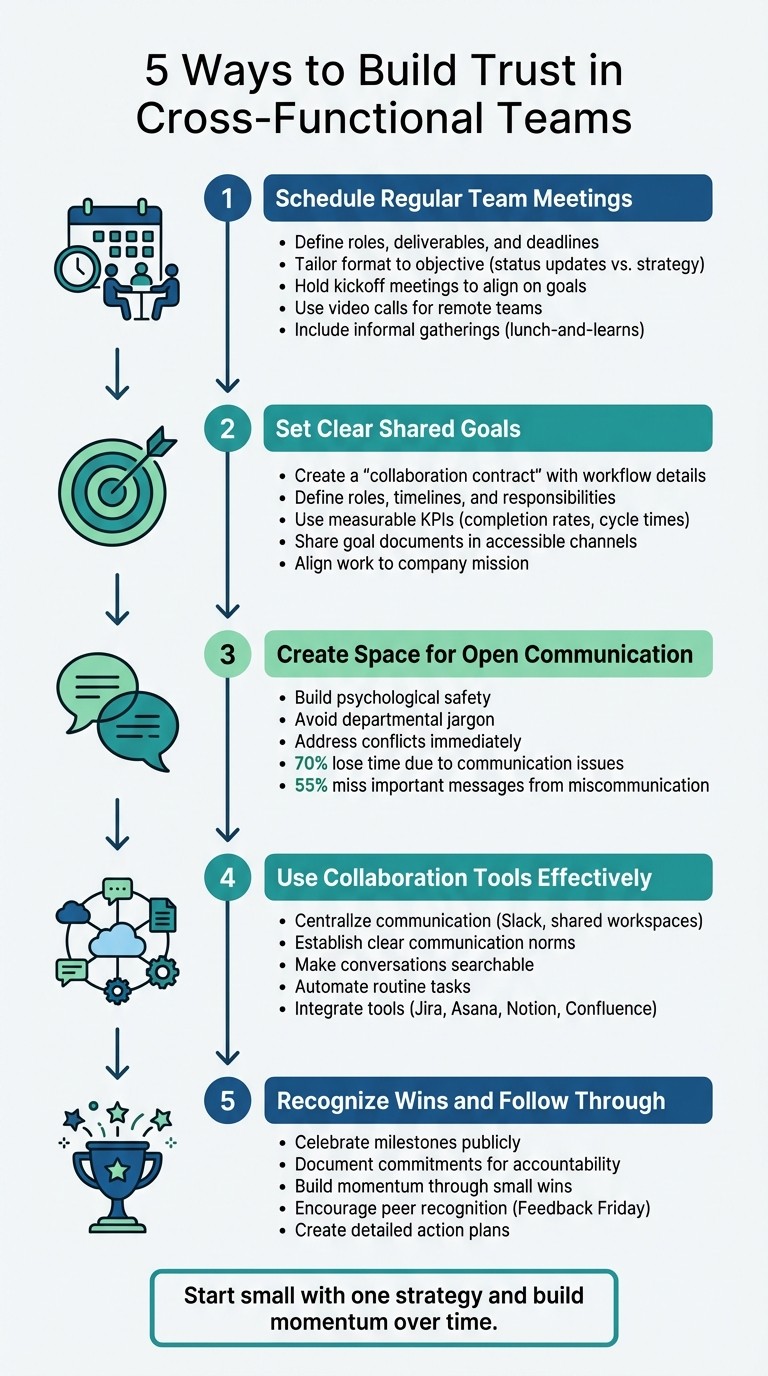
5 Steps to Build Trust in Cross-Functional Teams
Build Trust & Collaboration With Cross-Functional Teams | Panel Discussion
1. Schedule Regular Team Meetings
Holding regular team meetings is essential for building trust within cross-functional teams. These meetings help avoid silos and create a clear framework for collaboration by defining roles, deliverables, and deadlines. This structure turns ambiguous handoffs into dependable commitments, which are key to fostering trust and reliability [4].
Not all meetings are created equal, so it's important to tailor the format to the objective. For instance, an information-sharing session is very different from a decision-making meeting. A weekly status update, where team members share progress, serves a distinct purpose compared to a strategy meeting focused on prioritizing new features [4].
Kickoff meetings play a crucial role in aligning teams from the outset. These sessions clarify the project's purpose, goals, responsibilities, and success metrics, ensuring everyone understands the broader vision. When the entire team is on the same page from day one, it minimizes the risk of misaligned efforts or redundant work [5].
For remote teams, leveraging video conferencing tools can help bridge the gap. Brief video huddles or regular calls allow team members to connect on a personal level and address issues more efficiently than text-based communication. Seeing each other's faces fosters familiarity and helps pick up on nonverbal cues, which are important for building empathy and rapport [3] [5].
In addition to formal meetings, informal gatherings like lunch-and-learns can break down hierarchical barriers. These relaxed settings encourage open dialogue and create opportunities for low-pressure interactions, further strengthening trust within the team [1].
2. Set Clear Shared Goals
When everyone on the team understands how their work contributes to the company’s overarching mission, trust and alignment naturally follow [5]. Clarity turns lofty ambitions into actionable collaboration.
Start by creating a "collaboration contract." This document outlines the entire workflow, including the sequence of tasks, timelines, and specific roles for each department [4]. It provides a realistic foundation for discussing feasibility and resource allocation.
Detailed action plans with clear responsibilities and deadlines are key to keeping teams accountable and dependable [3]. They also help avoid redundant efforts and ensure everyone stays focused on their commitments.
Define success using measurable KPIs like project completion rates, cycle times, or deviations from time estimates [5]. These data-driven benchmarks allow teams to assess performance objectively, steering conversations away from subjective opinions. This clarity is further enhanced when teams turn Slack threads into searchable answers to maintain a single source of truth. When the goals are clear, it’s easier for everyone to prioritize the group’s success over individual achievements.
Kick things off with a formal meeting to align on objectives, roles, and metrics. Then, share key goal documents in organized Slack channels to keep them visible and accessible [5][2]. These practices strengthen shared purpose and set the stage for seamless cross-functional collaboration.
3. Create Space for Open Communication
Psychological safety is the foundation for team members to share ideas and speak up without fear [5]. When people feel secure, they’re more likely to take risks, be vulnerable, and offer their unique perspectives - key elements for successful cross-functional collaboration. Here’s how to nurture this kind of environment.
Start with low-pressure opportunities to build trust. Jenny Gottstein, former director of games at The Go Game, recommends activities like improv classes to encourage risk-taking and help teams see small failures as stepping stones to success [1]. Informal settings, such as lunch-and-learns, can also break down hierarchical barriers and create space for open dialogue [1].
Clear communication is another critical piece, often enhanced by AI in Slack team communication. Avoid jargon that can alienate team members from different functions [4]. When everyone uses straightforward language, participation becomes more inclusive, and misunderstandings decrease. This clarity is especially important when teams frequently ask the same questions, which can stall progress. A 2024 communication report revealed that 70% of respondents lost valuable time due to communication issues, while 55% missed important messages because of miscommunication [6].
Addressing conflicts as they arise is equally important. Rick Lepsinger, President of OnPoint Consulting, explains:
"If a problem is ignored, it won't get fixed. Such problems erode productivity and trust over time" [3].
When team members see their concerns are heard and acted upon, trust grows. Be alert to warning signs like gossip, blame-shifting, or micromanagement, as these behaviors can signal deeper issues [3].
Finally, reinforcing trust through public acknowledgment of each team’s expertise is crucial [4]. Cross-functional groups can become defensive when they feel their autonomy is at risk [4]. Leaders should ensure every department gets credit for its contributions, which helps reduce territorial behavior and keeps communication flowing.
4. Use Collaboration Tools Effectively
The right tools can strengthen cross-functional trust, complementing the trust built through regular meetings and clear goals. According to a 2023 State of Work survey involving over 18,000 desk workers, one of the biggest obstacles to productivity is constantly switching between disconnected apps [4].
Centralize communication in shared workspaces. Platforms like Slack help break down departmental silos by offering dedicated spaces where teams can exchange ideas, review documents, and align on decisions in real time [4] [5]. Slack’s integrations with tools such as Jira, Asana, Zendesk, Notion, and Confluence further simplify workflows, reducing friction and keeping communication streamlined.
Establish clear communication norms. Once communication is centralized, set clear guidelines to ensure effective collaboration. Define how to use threads, emojis, and public channels to keep discussions organized. Ryan Engley, VP of Product Marketing at Unbounce, highlights the importance of this:
"To have a healthy, functioning team, with really strong dynamics, individuals need to have a very high level of self-awareness" [2].
Turn conversations into searchable knowledge. While Slack excels at real-time collaboration, important insights often get lost in endless threads. Unlike Slack AI, which depends on chat history, Question Base pulls verified information directly from trusted sources like Notion, Confluence, and Salesforce. This ensures that when someone asks a question in Slack, they receive instant, accurate answers from your official documentation - eliminating the need to dig through old messages and reducing interruptions.
Automate routine tasks to reduce manual errors. Automation can further enhance trust by minimizing errors and saving time for more strategic work. Slack’s Workflow Builder, for example, can automate recurring tasks, allowing teams to focus on higher-value activities. Ruth Baril, Product Specialist at Slack, explains:
"The data warehouse alerts get people to start really paying attention to the trends that we see from our customers... It's this very healthy cycle" [7].
With these tools in place to ensure smooth communication and collaboration, teams are better positioned to strengthen trust and celebrate achievements, as we’ll explore next.
5. Recognize Team Wins and Follow Through on Commitments
Celebrate milestones publicly to boost team spirit. Acknowledging milestones in a public setting energizes teams and reinforces individual credibility [5]. Group recognition not only highlights individual contributions but also strengthens trust within the team. By crediting specific expertise, it helps validate the team’s efforts and reduces the defensiveness that can sometimes arise in cross-functional settings [3][4].
Blend celebrations with learning opportunities. Instead of traditional social events, consider creative approaches like a work-related talent show that allows team members to showcase their skills. This type of celebration combines recognition with professional growth, making the event both enjoyable and productive [1].
Document commitments to ensure accountability. Reliability - keeping promises and meeting commitments - is a cornerstone of trust [3]. To support this, create detailed action plans that clarify responsibilities and deadlines. Rick Lepsinger, President of OnPoint Consulting, emphasizes:
"Action plans improve reliability – they increase the likelihood that commitments are top of mind and that people will deliver on their promises" [3].
By documenting responsibilities, expectations become clear and actionable rather than vague.
Build momentum through consistent small wins. Use tools like digital reminders or quick team huddles to stay on top of smaller tasks. These small, consistent actions help establish the momentum needed to achieve larger goals [2]. Simple feedback practices, like taking five minutes at the end of a meeting to discuss what’s working and what could improve, can also drive progress. Posting these insights in a shared channel ensures accountability and keeps the team aligned [2].
Encourage regular peer recognition. To foster a culture of appreciation, introduce lightweight practices like "Feedback Friday" threads where team members can publicly acknowledge each other’s contributions [2]. Implementing Slack knowledge retention strategies ensures these shout-outs and insights aren't lost in the chat history. This recurring practice not only builds empathy but also strengthens team connections, laying the groundwork for more meaningful collaboration.
Conclusion
Fostering trust within cross-functional teams is a process that requires steady and consistent effort. By focusing on practical strategies, you can start making meaningful changes right away.
Begin by adopting one approach at a time to create momentum. For instance, set up clear communication guidelines that encourage openness while respecting boundaries. These small but intentional steps can pave the way for broader organizational improvements.
As trust builds, you’ll notice some clear indicators: team members prioritizing shared goals over their department’s interests, conversations becoming more open and personal, and colleagues feeling safe to admit mistakes without shifting blame. Signs like proactive collaboration across departments signal that trust is taking root.
From regular check-ins to using the right tools, these methods have proven effective in strengthening both accountability and teamwork. Successful teams move beyond casual rapport to establish defined roles, documented commitments, and consistent follow-ups. As Ron Ashkenas, a noted organizational expert, puts it:
"When people know what's needed, in what form, and by when, they can then tell you whether it's possible or not, and then you can have a real dialogue about what can be done" [4].
Another critical piece of the puzzle is efficient knowledge sharing. For teams that rely on accurate internal information, Question Base offers seamless access to trusted sources like Notion, Confluence, Salesforce, and Google Drive - delivering verified, audit-ready answers directly in Slack. While Slack AI excels at boosting general productivity and summarizing conversations, Question Base is designed specifically for support teams, HR, and IT that need dependable, scalable answers. Explore more at questionbase.com.
FAQs
How can we create a safe and supportive environment in cross-functional teams?
Creating a safe and supportive environment in cross-functional teams starts with fostering psychological safety - a space where everyone feels respected, valued, and free to share their ideas without fear of being judged. This begins with clear communication, openness, and leadership that prioritizes inclusivity. Leaders play a key role by practicing active listening, welcoming diverse perspectives, and addressing concerns with empathy and understanding.
Trust grows when collaboration is encouraged through shared goals, mentorship opportunities, and clearly defined roles and expectations. When team members feel supported and confident, they’re more willing to take risks, contribute creative ideas, and work together effectively toward shared objectives. By focusing on these practices, teams can build a culture rooted in trust and respect, setting the stage for success.
What are the best tools for improving communication and trust in cross-functional teams?
The best tools for improving communication and building trust in cross-functional teams are those that simplify collaboration, promote transparency, and centralize knowledge. Slack stands out for real-time communication and its channel-based organization, keeping teams connected and on the same page. With integrations for platforms like Notion, Confluence, and Salesforce, Slack helps break down silos and ensures critical information is always within reach.
For teams looking to take Slack to the next level, Question Base offers an AI-powered solution that turns Slack into a smart knowledge assistant. It connects directly to trusted documentation sources, delivering verified answers and cutting down on repetitive questions. This makes it especially helpful for HR, IT, and support teams handling intricate workflows. Pairing Slack with Question Base enables teams to work more effectively, build trust, and thrive in complex, collaborative settings.
What are some effective ways to celebrate team achievements and boost morale?
Celebrating team achievements is an excellent way to lift spirits and build stronger connections among team members. It doesn’t have to be elaborate - a team lunch, a small gathering, or personalized awards to acknowledge contributions can go a long way. These moments of recognition foster a sense of belonging and mutual appreciation.
Another approach is to create recognition programs that spotlight success stories across the organization or mark milestones like completing a major project or reaching work anniversaries. Whether the celebration takes place in person or virtually, thoughtful gestures can make team members feel appreciated, deepen trust, and encourage ongoing teamwork. The focus should always be on making these celebrations meaningful and tied to the team’s collective objectives.